

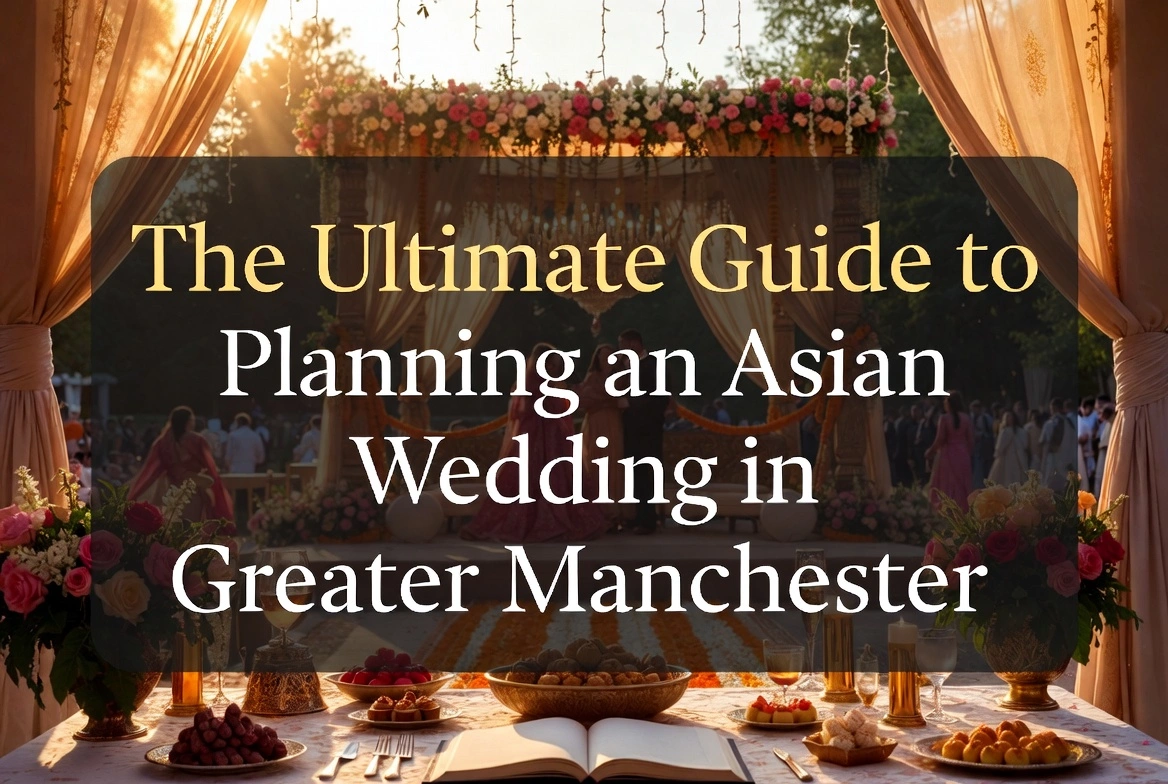
An Asian wedding is not just a single event. It is a collection of moments, rituals, colours, food, and memories spread across several days. The planning behind it is just as layered.
If you are planning a wedding in Greater Manchester and want it to feel genuinely personal, culturally rich, and completely stress-free, you are in the right place. As an experienced Asian wedding planner team in Manchester, we have spent over 18 years helping families across the region bring their vision to life.
Whether you are looking for a fully bespoke Asian wedding from scratch or need expert hands to take over midway, this guide covers everything you need to know.
If you are currently planning your wedding, you can book a free consultation with our wedding planning team to discuss your plans in detail.
Why Greater Manchester Is a Brilliant Place for an Asian Wedding
Greater Manchester has one of the largest South Asian communities in the UK. Families in Oldham, Rochdale, Bolton, Salford, and Manchester City have been celebrating weddings here for generations.
That history means the local infrastructure is genuinely excellent. You have access to halal caterers who know their craft, decorators who understand the difference between a Baraat backdrop and a Mehndi setup, and venues that have hosted hundreds of large South Asian celebrations.
If you are thinking about Pakistani wedding planning in Oldham or an Indian celebration in Cheshire or Salford, you are working with a region that already speaks your language. Our team at Xquisite has built trusted supplier relationships across all of these areas, so you do not have to start from zero.
If you want a wedding planner in Manchester who knows this world deeply, we are here for that conversation.
Understanding Asian Wedding Traditions and What to Plan For
Every South Asian family celebrates differently. But understanding the broad structure of Pakistani, Indian, and Sikh weddings helps you plan your timeline, budget, and suppliers far more clearly.
Pakistani Wedding Traditions
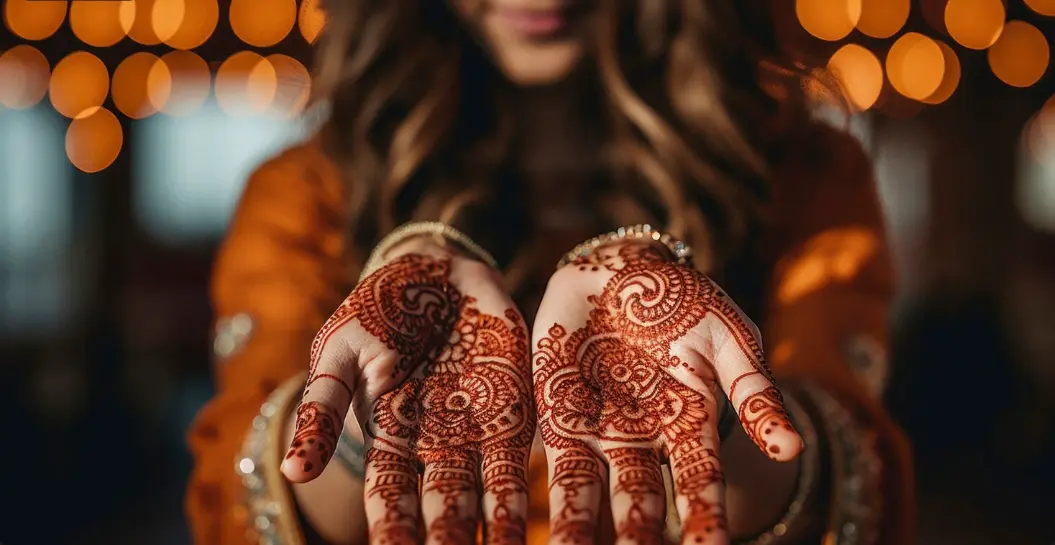
A traditional Pakistani wedding runs across three to four days. The Mehndi or Dholki is usually first, joyful and informal, with henna, music, and dancing. The Nikah is the Islamic marriage ceremony, intimate and deeply meaningful. The Baraat is the groom’s procession to the bride’s venue, one of the most visually and celebratorily memorable moments of the whole celebration. The Walima follows as a formal reception hosted by the groom’s family.
Each day calls for different decorations, different outfits, and often different venues. One thing many couples overlook: not every guest in the room understands Arabic or Urdu. Where possible, look for an Imam who can move between languages naturally during the ceremony. It keeps every guest present in the moment rather than letting half the room drift.
Indian Wedding Traditions
Indian weddings vary considerably depending on region and family customs. A typical structure includes the Mehendi night, the Haldi ceremony, the Sangeet, the main ceremony with Pheras or a ring exchange, and a reception.
The Haldi is one of the most intimate events of the whole celebration. Close family members apply turmeric paste in the hours leading up to the wedding. It does not need grand decoration. It needs warmth, good light, and people who genuinely love you. The Sangeet sits at the opposite end of the energy scale, with rehearsed dances, live musicians, and a genuinely theatrical atmosphere.
Sikh Wedding Traditions
A Sikh wedding centres on the Anand Karaj ceremony, conducted inside the Gurdwara. The four rounds of the Lavaan are the heart of the celebration, each carrying its own spiritual significance. A langar, a community meal, usually follows the ceremony, and then a separate evening reception.
For Sikh couples in Greater Manchester, the reception is often where the larger celebration happens, with family, dancing, and a full food spread. The spiritual ceremony and the social reception serve different purposes and need to be planned as two distinct events.
What Makes a Bespoke Asian Wedding Different
No two Asian families celebrate in the same way. A truly bespoke Asian wedding starts with questions, not a fixed package. We never walk in with a template and try to fit your family into it. We listen first, then build everything around what actually matters to you.
Civil Ceremony and Legal Registration
Whatever your religious ceremony, most couples in Greater Manchester also need a separate civil registration to make the marriage legally recognised in the UK. This is handled through your local register office and needs to be booked independently of your wedding planner.
Do not leave this until the last minute. Register offices in Oldham, Rochdale, and Manchester City can book up weeks in advance during peak wedding season. Sort the legal side as early as you sort your venue. For guidance on legal marriage requirements in England, the GOV.UK marriage registration guidance is the most reliable starting point.
How to Start Planning Your Asian Wedding in Greater Manchester
Set Your Timeline Early
For a large Asian wedding in Greater Manchester, 12 to 18 months is the ideal window. Popular venues across Oldham, Rochdale, and Manchester City fill up fast, especially for summer Saturdays.
Book in this order: venue first, then caterer, then decorator, then photographer and videographer, then outfits and entertainment. Doing everything at once leads to rushed decisions you will regret. Our team at Xquisite has delivered full packages in as little as four months when needed, but the earlier you start, the more options you have.
Get Your Guest List and RSVPs Right
Your guest list is the most important number in your entire plan. It determines your venue size, catering volume, seating layout, and a large chunk of your budget. Asian weddings in Greater Manchester commonly host between 300 and 600 guests. Extended family expectations are real and worth building in honestly from the start.
Ask for firm RSVPs at least six weeks before the event. For events without a formal table plan, confirmed numbers still matter for catering quantities. On the invitations, consider listing the start time 30 minutes earlier than you actually need guests seated. It builds a practical buffer that protects your schedule and your catering timings without any fuss.
Set a Realistic Budget and Think About Timing
Break your budget down by category: venue hire, catering, decoration, photography and videography, outfits across all days, entertainment, and contingency. Total budgets for large Asian weddings in Greater Manchester typically range from £15,000 to £50,000 or beyond, depending on guest numbers and styling choices.
One thing many couples overlook: the time of year significantly affects cost. Summer Saturdays command the highest prices from every supplier. A Friday or Sunday in November through March can unlock the same venues and decorators at considerably lower rates. If there is a supplier you love but cannot quite afford in peak season, check whether an off-peak date changes the picture before ruling them out.
At Xquisite, every quote is fully itemised with zero hidden charges. For more details, read our guide on how much a wedding planner costs in Manchester.
Choosing the Right Venue for an Asian Wedding in Manchester
What to Look for in an Asian Wedding Venue
Capacity comes first. You need a venue that comfortably seats your full guest count with room for a stage, dance floor, and free movement. Halal catering is non-negotiable for many families. Some venues have halal-certified kitchens. Others allow external caterers to bring their own equipment and food. Always confirm this before you visit.
Parking matters far more than couples expect. When 400 guests arrive at once, the car park capacity directly affects how the day begins. Check noise curfews too, as many Asian weddings run later into the evening than a standard reception.
Before committing to any venue, get clear answers to these questions: Is the kitchen halal-certified, or can external caterers bring their own equipment? What is the maximum seated capacity, including stage and dance floor? Is there a bridal suite on site? What is the noise curfew? Is parking sufficient for 300 to 500 guests?
Where to Look Across Greater Manchester
Oldham is one of the most active areas for South Asian weddings in the region. The community is large and well-established, which is why Pakistani wedding planning in Oldham is one of the most searched terms locally. Rochdale and Bolton both have strong options for larger celebrations. Salford and Manchester City centre offer more contemporary spaces. Cheshire works well for luxury reception settings where a premium feel is the priority.
Asian Wedding Food: What to Serve and How to Serve It
Food is one of the most talked-about parts of any Asian wedding. Guests remember a great spread, and they definitely remember a disappointing one.
Traditional Dishes to Consider
For a Pakistani wedding, the classics remain the most loved: fragrant biryani, slow-cooked nihari, rich karahi, seekh kebabs, and a halwa puri breakfast station for morning events. For an Indian wedding, butter chicken, dal makhani, chaat stations, and dosa counters all work beautifully. For desserts, gulab jamun, kheer, barfi, and jalebi are consistently popular across all traditions.
Buffet, Food Stations, or Sit-Down Service
For large numbers of guests, a buffet is the most practical option. It moves guests through quickly and allows more variety on the menu. Food stations work particularly well for Mehndi nights and Sangeet events where the mood is more relaxed and social. Sit-down service suits a Walima or formal reception where a more refined atmosphere is the goal.
Asian wedding receptions in Greater Manchester regularly run past midnight. By 10 pm, guests who ate at 7 pm are hungry again. A late-night station, even something simple like naan wraps, chaat bites, or a chai and dessert counter, keeps energy up and takes the pressure off the main meal to carry the whole evening.
At Xquisite, we run our own in-house halal catering service. You are not coordinating between a separate caterer and a separate planner. We handle both, which keeps everything cleaner and reduces the chance of anything falling through the gap.
Read our guide on Asian wedding food ideas for your Greater Manchester wedding for a fuller breakdown.
Decoration and Styling: Making the Space Feel Like Yours
The decoration at an Asian wedding does a lot of heavy lifting. It sets the mood for each event, frames the most photographed moments, and tells your guests something about who you both are.
Key Decoration Elements
The stage or mandap is the centrepiece of most Asian wedding setups. Whether you want a full floral mandap for a Hindu ceremony or a richly draped stage for a Pakistani reception, the design needs to complement the venue dimensions and your colour palette.
Floral arrangements are where personality really comes through. Marigolds, roses, and jasmine are traditional and still beautiful. But many couples now layer in more contemporary flowers like pampas grass, dried botanicals, or moody dark blooms alongside the classics.
Draping, fairy lights, ceiling installations, and table centrepieces all contribute to the overall atmosphere. Good decoration is not just about looking impressive in photographs. It is about how the space actually feels when 400 people are inside it.
Colour Themes for Pakistani and Indian Weddings
Traditional palettes for Pakistani weddings lean on deep reds, greens, and golds. These are rich, formal, and unmistakably beautiful. Indian weddings often feature vibrant pinks, oranges, and yellows, particularly during the Mehendi and Sangeet events.
Modern couples frequently blend tradition with contemporary design. Dusty rose, champagne, sage green and ivory, navy and antique gold are all popular choices that feel current without abandoning the warmth that South Asian wedding aesthetics are known for.
Mehndi Night and Sangeet Decoration
The Mehndi night calls for a completely different energy from the main wedding day. Yellows, oranges, and warm greens dominate. Floral photo walls, neon signs, hanging-basket installations, and dimly lit seating areas all work well for this occasion.
The Sangeet setup needs to be performance-ready. Think bold stage lighting, a proper sound system, enough open floor space for dancing, and a backdrop that photographs well at night.
For a deeper look at both events, read our guide on Mehndi Night and Sangeet Decoration Ideas for Asian Weddings in Manchester.
Entertainment Across All Wedding Events
Entertainment is what separates a wedding that guests enjoy from one they genuinely remember. At an Asian wedding, each event has its own entertainment needs and its own energy level to match.
For the Baraat procession, dhol players leading the groom’s arrival set the tone immediately. Check with your venue well in advance about noise restrictions, as some spaces in Greater Manchester limit live percussion outside. A choreographed groom’s entrance supported by bhangra dancers or a live dhol alongside a DJ creates the kind of arrival moment that guests talk about for years.
The Sangeet is built for performance. Bhangra groups, classical dancers, and live musicians all work well here. Families who want to perform their own rehearsed dances need a proper stage setup, good lighting, and a sound system that can handle both recorded tracks and live microphone use.
For the main reception or Walima, a DJ who understands both Bollywood and contemporary music keeps the floor moving across all generations. Live singers, saxophonists, or a small band during the dinner hour add something different before the dancing begins.
The Mehndi and Dholki evenings work well with informal live music, a good playlist, and enough open space for spontaneous dancing. These events do not need elaborate entertainment production. They need atmosphere, warmth, and flexibility.
Managing a Multi-Day Asian Wedding
Day-by-Day Structure
Day one is typically the Mehndi or Dholki: informal, musical, joyful. Day two is often the Nikah, or main ceremony: quieter in tone and more emotionally significant. Day three brings the Baraat and main reception, the biggest and most logistically demanding day of the whole celebration. Day four, if included, is the Walima.
Each day needs its own run sheet, supplier schedule, and setup and breakdown window. They cannot be planned in isolation from each other.
Suppliers, Transport, and Group Photography
Different photographers, decorators, and catering teams may be involved across different days. Someone needs to coordinate all these moving parts, manage venue changeovers, and make sure nothing slips through the cracks.
If your wedding spans multiple locations, do not assume guests will find their own way between them. For out-of-town families in particular, moving from a Mehndi venue in Oldham to a reception in Salford without clear guidance can lead to late arrivals and a fractured start. Share postcodes, parking details, and travel times clearly in advance. For elderly guests, a dedicated coach is worth considering.
Group photography is one of the biggest time risks at any large Asian wedding. 30 group shots without a clear system can take up 90 minutes of your reception. A numbered list, run by a designated person independent of both families, brings the same shots down to 40 minutes. Prioritise elderly guests and grandparents first. Save the larger extended family groups until after the immediate family has eaten.
For a full step-by-step breakdown, read our guide on how to plan a Pakistani or Indian wedding in Greater Manchester step by step.
Should You Have a Master of Ceremonies?
This is something many Greater Manchester families do not consider until someone else raises it. An MC is the person who holds the room together throughout the day. Not the DJ. Not the photographer. The person who makes sure every part of the event flows into the next without awkward gaps or confusion.
At a large Asian wedding with 400 guests, covering a Baraat arrival, group photography, a ceremony, food service, speeches, and dancing, someone needs to be watching the clock and constantly moving things forward. A good MC understands the cultural weight of each moment. They will not rush a Rukhsati or cut short a Baraat procession. But they will quietly shift the room from one moment to the next without anyone feeling pushed.
If you book a DJ for three hours of dancing and nobody keeps the day on schedule, your guests often end up with only 45 minutes. A well-managed day gives them the full three hours. At Xquisite, our on-the-day coordination covers exactly this kind of room management, so the day feels seamless from the moment guests arrive.
Outfits and Photography: Getting Both Right
Outfits Across All Events
Asian wedding outfits involve a series of decisions, one per event, each with its own colour expectations and level of formality. For the Mehndi, lighter outfits in yellow, green, or mustard work beautifully. For the Nikah or main ceremony, deep reds, maroons, and heavily embroidered pieces are traditional. For the reception or Walima, many brides choose something slightly more contemporary.
The groom’s sherwani should complement rather than match the bride exactly. Set a colour brief for family attire early. It saves an enormous amount of last-minute stress in the weeks leading up to the wedding.
For bridal shopping, Rusholme and the Wilmslow Road area in Manchester remain the best starting point in the region. For bespoke tailoring, allow at least three to four months and build in time for alterations.
Photography Across Multiple Days
Ask photographers to show you work specifically from Asian weddings, not just general wedding portfolios. Cultural moments like the Rukhsati, the Pheras, the Lavaan rounds, and the Baraat procession each require someone who understands their significance and knows exactly where to position themselves.
Low-light ceremony photography is a real skill. Evening receptions with heavy draping and warm lighting require experience in handling difficult conditions. Always ask to see examples from similar venues and lighting setups before you book.
If your wedding runs across multiple days, a team that covers everything builds a consistent visual story. A highlight reel is what you share immediately after. A full-length film is what you return to for detail years later. Both are worth having.
Working With an Asian Wedding Planner in Manchester
Planning an Asian wedding without professional support is possible. Families do it every year. But the gap between a wedding that felt stressful and one that felt joyful often comes down to whether the right Asian wedding planner team in Manchester was in place from the beginning.
We do not just manage logistics at Xquisite. We understand the cultural weight of each event. We know which suppliers across Greater Manchester are genuinely experienced with South Asian weddings and which are not. We know when a ceremony moment needs more time and when the schedule needs to move forward.
We have worked as an Indian wedding coordinator in Greater Manchester for families in Salford, Rochdale, and Cheshire. We have handled full Pakistani wedding planning in Oldham and across Bolton and Tameside. Over 500 weddings and 18 years in this community mean we bring context that no generic checklist can replace.
Every package we build is bespoke. Every quote contains zero hidden charges. And every family we work with gets a team fully invested in their day from the first conversation to the final moment of the evening.
Looking After Yourself Through the Planning Process
Planning a multi-day Asian wedding is genuinely demanding. The decisions do not stop. The family’s opinions do not stop. The supplier follow-ups do not stop. Somewhere in the middle of it all, the couple themselves can get lost.
Delegate tasks that do not need your personal sign-off. Set aside one evening per week that is entirely wedding-free. If something is causing you disproportionate stress relative to its actual importance, that is a signal to let it go or hand it over.
Knowing that a trusted planning team is handling the logistics means you can save your energy for the moments that actually matter. That is exactly what we are here for.
Plan Your Asian Wedding With Xquisite Wedding Service
You have put years of dreaming into this. Your family has expectations. The logistics of a multi-day, multi-venue, multi-supplier Asian wedding in Greater Manchester are genuinely complex.
Our team at Xquisite is here to carry that with you. We bring 18 years of experience, a trusted network of local suppliers, and a genuine understanding of South Asian wedding culture.
With 500+ weddings delivered, zero hidden charges, and a 98% client recommendation rate, we are the team you want beside you from the very first planning conversation.
Get in touch with Xquisite Wedding Service today to start. Or book your free consultation and let us get planning together.
Conclusion
Planning an Asian wedding in Greater Manchester is one of the most rewarding experiences a family can share. It is also one of the most complex. The multi-day structure, cultural details, large guest lists, and supplier coordination all require careful attention.
With the right Asian wedding planner team in Manchester beside you, the whole process shifts from overwhelming to genuinely enjoyable. You stop managing spreadsheets and start looking forward to every event.
Use this guide as your starting point. Read the sub-guides for decoration, food, and step-by-step planning. And when you are ready to talk, we are here.
Frequently Asked Questions
How far in advance should I book an Asian wedding planner in Manchester?
For a large multi-day Asian wedding, 12 to 18 months in advance gives you the most choice. Shorter timelines are possible. Our team at Xquisite has delivered full packages within four months when needed.
How much does a Pakistani or Indian wedding cost in Greater Manchester?
Total budgets typically range from £15,000 to £50,000 or beyond, depending on guest numbers, number of events, and styling level. At Xquisite, we provide fully itemised custom quotes with zero hidden charges.
Can you plan a multi-day Asian wedding across different venues in Manchester?
Yes, we handle this regularly. We coordinate suppliers, manage venue changeovers, and keep timelines running smoothly across multiple days and locations so nothing falls between the gaps.
Do you cater for both Pakistani and Indian weddings?
Absolutely. Our team has extensive experience with both Nikah and Baraat ceremonies, as well as Sangeet nights and Hindu wedding mandaps. Every celebration is planned around your specific family customs.
What makes a bespoke Asian wedding different from a standard package?
A bespoke Asian wedding is built entirely around your vision and your family’s traditions. Nothing is off-the-shelf. Every decision from venue to catering to decoration follows from what actually matters to you.

Pingback: Mehndi Night and Sangeet Decoration Ideas for Asian Weddings
Pingback: How to Plan a Pakistani Wedding in Manchester | 10 Steps